Choosing reliable Compact Heat Radiator suppliers requires more than comparing online prices. In 2026, buyers must examine thermal performance, physical dimensions, material quality, production capacity, and after-sales support. A radiator that fits a 600-millimeter equipment cabinet may still fail under continuous heat loads. Small details matter, including fin spacing, tube construction, pressure resistance, and connector compatibility.
This guide introduces leading suppliers worldwide for automotive, industrial, electronics, and compact HVAC applications. It considers engineering experience, manufacturing consistency, testing procedures, certifications, delivery capability, and customer service. Supplier websites often present ideal figures. Real installations can be less predictable. That deserves attention.
Evaluation should include verified technical datasheets, sample testing, warranty terms, and clear communication about customization. Buyers should also confirm whether performance ratings apply to specific airflow, coolant, or ambient-temperature conditions. A supplier with advanced equipment is not automatically the best fit. Practical responsiveness matters too. So does transparent documentation.
The selected companies are discussed as potential industry leaders, not as permanent rankings. Market positions, product lines, and compliance requirements may change during 2026. Independent verification remains necessary. Even experienced buyers can overlook installation space, maintenance access, or replacement availability. That happens.
By combining technical evidence with supplier experience, this overview aims to support safer and more informed sourcing decisions. It focuses on dependable performance rather than attractive claims alone. Expect useful comparisons, but not perfect certainty. Heat management is application-specific.
In 2026, compact heat radiator sourcing will focus on verified thermal performance, not appearance alone. The International Energy Agency reports that buildings consume about 30% of global final energy. Heating remains a major demand in colder regions. Space is also tightening in apartments, hotels, and renovated offices.
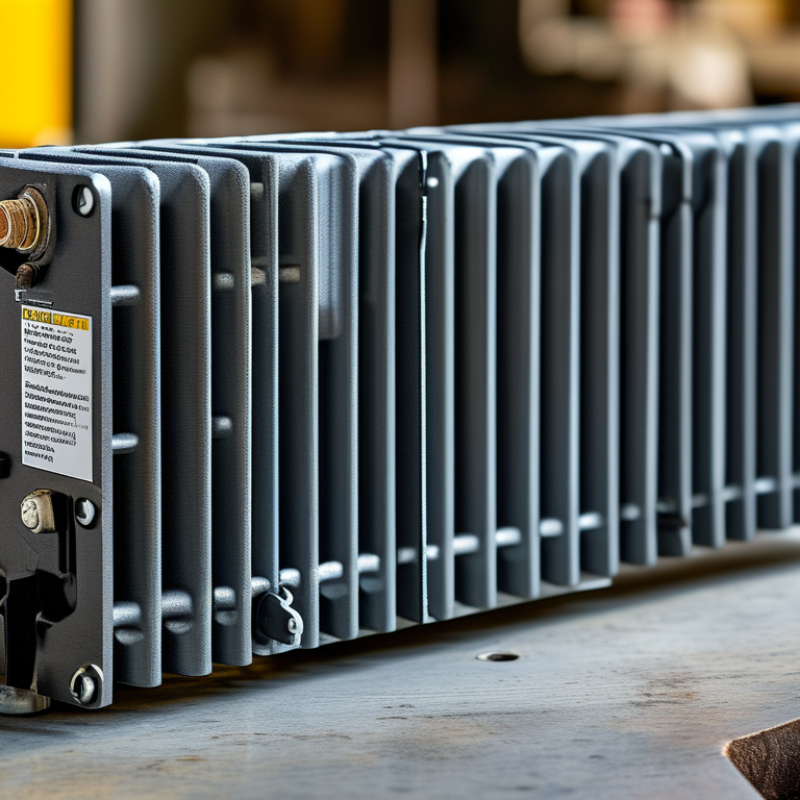
The main types include steel panel, aluminum, cast iron, and compact tubular radiators. Steel offers stable production and broad size choices. Aluminum responds quickly, but alloy quality and corrosion control require careful checking. Cast iron stores heat longer, although its weight complicates installation. A small radiator is not automatically efficient. That assumption deserves scrutiny.
EN 442-1 sets technical requirements for radiators and convectors. EN 442-2 defines testing and thermal-output rating methods. Buyers should compare output at the same temperature difference, commonly ΔT50, rather than trusting oversized catalog claims. Supplier audits should request laboratory reports, dimensional tolerances, coating specifications, and pressure-test records. The UNEP 2024 Global Status Report for Buildings and Construction places buildings at roughly 32% of global energy use and 34% of global carbon dioxide emissions. These figures strengthen demand for lower-temperature heating systems. However, radiator performance depends on pipe design, controls, insulation, and installation quality. Reports can guide procurement, but site conditions still decide the result.

Types, materials, and EN 442 reference rating conditions
Panel radiators, compact convectors, tubular radiators, and low-profile radiators.
Painted or galvanized steel, aluminium, and cast iron are the principal material groups.
EN 442-1 covers product requirements, while EN 442-2 defines thermal output test methods and rating.
The chart uses common EN 442 radiator rating conditions. Mean temperature difference is calculated as ((water inlet temperature + water outlet temperature) / 2) − room temperature. The reference condition 75/65/20°C has a mean temperature difference of 50 K.
Europe remains a strong hub for compact heat radiator production. Germany, Italy, Czechia, and Poland offer dense engineering networks and skilled metalworking labor. Suppliers often serve automotive, industrial, and building equipment markets. Their strengths include precise brazing, aluminum forming, and documented thermal testing. Factory visits can reveal more than polished brochures. Look for clean assembly areas, calibrated test benches, and stable component storage.
Asia-Pacific provides broad production capacity and flexible sourcing. China supports large-scale manufacturing, while Japan and South Korea emphasize process control and advanced materials. India is expanding in cost-sensitive and regional equipment programs. North America adds dependable access to automotive and commercial heating customers. The United States, Mexico, and Canada each support different stages, from design validation to final assembly. Yet, supplier maps can mislead. A listed production city may only host final packaging. Check whether core manufacturing happens locally.
Tips: Request airflow, pressure-drop, corrosion, and thermal-cycle data before approval. Compare samples from at least two production sites. Review monthly capacity, tooling ownership, and backup material sources. Ask for recent audit records, but verify them independently. A low quotation may hide longer tooling schedules or inconsistent fin quality. I would also inspect a pilot batch personally when failure costs are high.
Top Compact Heat Radiator Suppliers Worldwide
Compact heat radiators are often specified for rooms with limited wall space. Their practical output usually ranges from 300 to 2,000 W. However, wattage must be checked against the testing condition. A ΔT50K rating commonly reflects 75/65/20°C water and room temperatures. It does not represent every installation.
Pressure data also needs careful reading. A 6–12 bar range may describe maximum working pressure, test pressure, or both. These values are not interchangeable. Reliable suppliers should provide clear hydraulic charts, material specifications, connection details, and corrosion protection data. I also look for dimensional tolerances, because a small fitting error can complicate installation.
Field checks matter. Measure flow temperature, return temperature, and room temperature after the system stabilizes. A compact unit rated at 1,000 W may deliver less in a low-temperature heat pump system. That gap is easy to miss. It can leave a cold corner.
Supplier claims should be compared under identical standards. Ask for independent test references, pressure-test procedures, and warranty conditions. Experience shows that attractive catalog figures sometimes hide assumptions about airflow, mounting distance, or clean surfaces. I would challenge any quote that lists output without ΔT conditions. The benchmark is useful, but it is not perfect. Real rooms remain unpredictable.
Supplier-neutral comparison of commonly available compact radiator configurations. Output values are nominal reference ranges measured at ΔT50K under EN 442-style rating conditions.
| Compact Radiator Category | Typical Dimensions (H × W × D) |
Nominal Output at ΔT50K | Recommended Working Pressure | Factory Test Pressure | Typical Water Content | Common Materials | Typical Connections | Suitable Applications |
|---|---|---|---|---|---|---|---|---|
| Steel Panel Type 11 | 400–900 × 400–1,200 × 60–70 mm | 300–1,000 W | 6–10 bar | 9–15 bar | 2.5–6.5 L | Low-carbon steel with powder coating | ½-inch side or bottom connections | Bedrooms, corridors, compact residential rooms |
| Steel Panel Type 22 | 400–900 × 400–1,200 × 100–110 mm | 600–2,000 W | 6–10 bar | 9–15 bar | 4.5–11.5 L | Low-carbon steel, convector fins, epoxy-polyester coating | ½-inch side, bottom, or integrated valve connections | Living rooms, offices, schools, and commercial interiors |
| Steel Panel Type 21 | 400–900 × 400–1,200 × 75–85 mm | 450–1,500 W | 6–10 bar | 9–15 bar | 3.5–8.5 L | Cold-rolled steel with treated steel fins | ½-inch side or compact bottom connections | Medium-output heating where wall depth is limited |
| Aluminium Sectional Radiator | 500–700 × 400–1,200 × 80–100 mm | 400–1,800 W | 6–10 bar | 9–15 bar | 2.0–7.0 L | Die-cast or extruded aluminium alloy | ½-inch threaded sectional connections | Low-water-content systems and residential heating |
| Compact Tubular Steel Radiator | 400–900 × 400–1,200 × 60–100 mm | 300–1,400 W | 6–10 bar | 9–15 bar | 2.5–8.0 L | Welded tubular steel with corrosion-resistant coating | ½-inch side or bottom connections | Residential, hospitality, and light commercial spaces |
| Compact Vertical Radiator | 1,200–2,000 × 300–600 × 60–100 mm | 700–2,000 W | 6–10 bar | 9–15 bar | 4.0–12.0 L | Steel panel or aluminium alloy | ½-inch bottom or side connections | Rooms with restricted horizontal wall space |
| Compact Towel Radiator | 700–1,200 × 400–600 × 70–100 mm | 300–900 W | 6–10 bar | 9–15 bar | 2.5–6.0 L | Low-carbon steel or stainless steel | ½-inch side or bottom connections | Bathrooms, washrooms, and small utility areas |
| Low-Temperature Compact Radiator | 400–900 × 600–1,400 × 100–160 mm | 500–2,000 W | 6–12 bar | 9–18 bar | 3.0–12.0 L | Steel or aluminium with high-surface-area fins | ½-inch thermostatic or bottom connections | Heat-pump systems and reduced-flow-temperature installations |
| Compact Cast-Iron Sectional Radiator | 500–700 × 400–1,000 × 90–150 mm | 500–1,600 W | 6–8 bar | 9–12 bar | 6.0–18.0 L | Cast iron with baked enamel or powder coating | ½-inch or ¾-inch threaded connections | Renovation projects and high-thermal-mass heating |
Technical note: Actual heat output depends on radiator size, water-flow rate, inlet and outlet temperatures, installation position, and correction factors. ΔT50K refers to a 50 K mean water-to-room temperature difference; pressure ratings must be checked against the applicable regional standard and system design.
For 2026 sourcing, compact heat radiator suppliers should pass more than a price comparison. I inspect factory records, production samples, and service responses. ISO 9001 indicates controlled processes, but it does not guarantee perfect radiators. Ask for the current certificate, issuing body, scope, and expiration date. Verify that the certified site matches the manufacturing address.
CE marking needs careful review. It shows conformity with applicable European requirements, not superior heating performance. Request the Declaration of Conformity, technical file references, and relevant test reports. A reliable supplier should explain testing methods without hiding behind paperwork. Check thermal output, pressure resistance, corrosion behavior, coating adhesion, and dimensional stability. Test results should identify models, materials, dates, and laboratory details.
Testing capacity reveals practical experience. Can the supplier run pressure tests on every batch? Can engineers investigate uneven heating or leaking joints? I prefer clear answers and repeatable records. Warranty terms also need close reading. Confirm coverage periods, excluded conditions, replacement procedures, and response times. A two-year warranty sounds useful, yet vague transport responsibilities may create disputes. Request installation guidance and spare-part availability. Some suppliers appear highly organized until a sample fails. That weakness deserves documentation, not optimism.
When comparing compact heat radiator suppliers, MOQ often reveals their production model. Small workshops may accept 50 to 200 units, while automated factories commonly require 500 units or more. A lower MOQ helps product testing, but unit prices can rise sharply. Request samples with identical dimensions, fin spacing, valve ports, and surface coating before approval.
Lead time should be checked beside capacity. Standard models may ship within 15 to 25 days, while custom tooling can add four to eight weeks. A capable supplier should explain monthly output, material availability, and peak-season limits. Ask for pressure-test records, thermal performance data, and inspection photos. Numbers without evidence are weak.
Export reach also matters. Suppliers serving multiple regions usually understand carton strength, pallet loading, customs documents, and local technical requirements. Confirm whether they can provide certificates, spare parts, and stable after-sales communication. A broad export network does not always mean better quality. Sometimes it only reflects trading activity. I would verify factory ownership, production photos, and recent shipment references. One overlooked detail is packaging: a damaged fin can reduce heat transfer before installation. The comparison may look incomplete without logistics costs, warranty handling, and replacement speed.