What is the Best Heat Exchanger Materials for Your Needs?
When it comes to selecting the best heat exchanger materials, understanding the unique demands of your applications is crucial. Dr. Emily Richards, a renowned expert in thermal systems, stresses, "Choosing the right materials can significantly affect efficiency and longevity." This underscores the importance of careful evaluation before making a decision.
Heat exchanger materials play a vital role in performance. Different materials offer various thermal conductivities, corrosion resistance, and costs. For example, copper excels in heat transfer efficiency but may not withstand corrosive environments. Stainless steel is durable, yet it can be costlier. Understanding these trade-offs is essential for effective decision-making.
Many industries utilize heat exchangers, from HVAC to petrochemicals. Each application imposes specific challenges that must be addressed through careful material selection. Reflecting on real-world experiences, one learns that no single material fits all situations. Continuous research and innovation shape this field, pushing boundaries. Balancing performance, cost, and durability is indeed a complex task in selecting heat exchanger materials.

Understanding Heat Exchangers and Their Applications
Heat exchangers play a critical role in various industries, ensuring efficient thermal energy transfer. Their applications range from power generation to chemical processing. A recent industry report notes that the global heat exchanger market is expected to reach USD 27 billion by 2027, emphasizing their importance in modern engineering. Choosing the right material is essential for optimizing performance and longevity.
Copper and aluminum are common materials due to their excellent thermal conductivity. However, they may not be suitable for all environments. For example, stainless steel works well in corrosive situations. Specialists often suggest considering the fluid type, temperature, and pressure when selecting materials.
Tips: Always evaluate the operational conditions. Assess the compatibility of materials with the working fluids. Conducting periodic maintenance checks can prevent costly replacements. It’s crucial to balance performance against lifecycle costs. Sometimes, the highest performing material isn’t the best choice. Reflection on maintenance needs is essential for sustainability. Buyers should seek expert advice when in doubt. This approach helps avoid potential pitfalls while ensuring efficiency and safety.
Key Properties of Heat Exchanger Materials
Heat exchangers play a crucial role in various industries, and choosing the right materials can significantly affect efficiency and longevity. Key properties to consider include thermal conductivity, corrosion resistance, and mechanical strength. For instance, stainless steel is often favored for its excellent corrosion resistance, suitable for both high and low temperatures. However, it may not always be the best choice for highly acidic environments.
Copper alloys are known for their high thermal conductivity, which can enhance heat transfer performance. However, these materials may suffer from corrosion in some applications, leading to shorter lifespans. Data from the Heat Exchange Institute suggests that nearly 25% of premature failures stem from material incompatibility.
**Tip:** Always assess the specific environmental conditions and fluids involved. For example, if your process involves seawater, consider titanium or other corrosion-resistant materials. Future maintenance costs may significantly impact initial material choices.
When selecting materials, it’s crucial to weigh the trade-offs. Some materials may excel in specific scenarios but underperform in others. Balancing initial costs with long-term performance and durability is essential. Ensuring your material choice aligns with both operational needs and external factors prevents costly mistakes down the line.
Common Materials Used in Heat Exchanger Construction
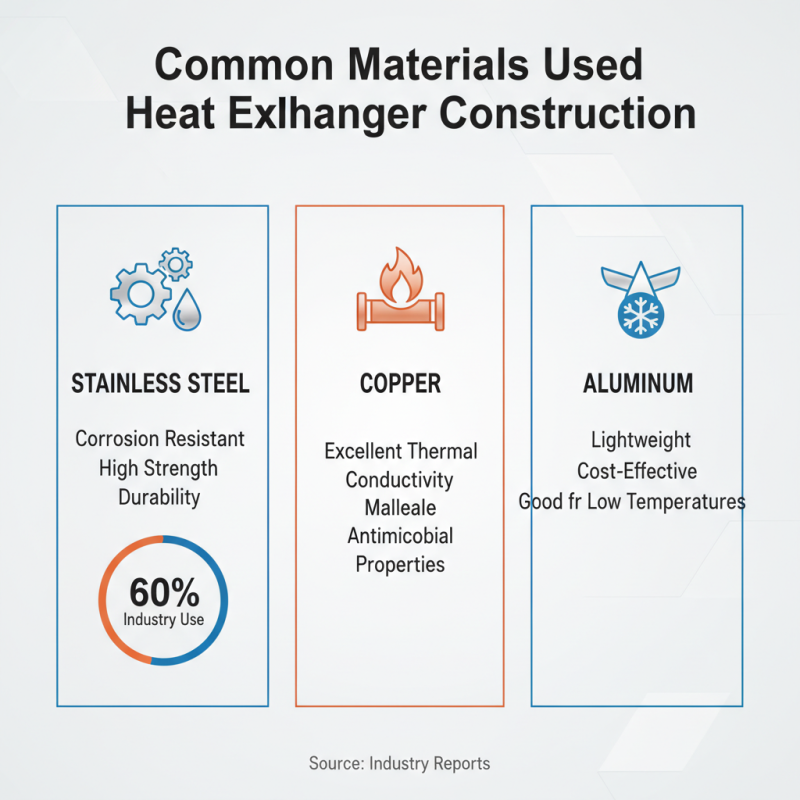
Heat exchangers are vital in various industries, requiring materials that can withstand high temperatures and corrosive environments. Common materials for these applications include stainless steel, copper, and aluminum. Stainless steel is favored for its resistance to corrosion and high strength. According to industry reports, about 60% of heat exchangers are constructed using stainless steel due to its durability.
Copper is another popular choice. Its excellent thermal conductivity allows for efficient heat transfer. Yet, it is susceptible to corrosion in certain environments. Recent studies indicate that while copper can enhance performance, its lifespan may be shorter compared to stainless steel in some applications. This trade-off is crucial when selecting materials.
When choosing a material for heat exchangers, consider the operational environment. Tips for selection include assessing temperature, pressure, and corrosive factors. Additionally, think about maintenance needs. A well-chosen material can reduce long-term costs while ensuring efficiency. Balancing performance with longevity is essential in material choice. Analyze your unique requirements thoroughly.
Factors Influencing the Choice of Heat Exchanger Materials
Choosing the right materials for heat exchangers is crucial. Several factors significantly influence this decision. The corrosiveness of the fluid should be a top concern. According to a study by the Heat Exchanger Research Council, about 30% of premature failures are due to corrosion-related issues. This highlights the importance of selecting materials that can withstand specific operating conditions.
Temperature and pressure are also key considerations. High temperatures may require materials like stainless steel or titanium. These metals maintain structural integrity under extreme conditions. Additionally, the choice of material impacts energy efficiency. A report from the International Energy Agency shows that inefficiencies in heat exchangers account for up to 10% of industrial energy losses.
Cost-effectiveness cannot be overlooked. While some materials might offer superior performance, they may not always be the most economical choice. Considering lifecycle costs can provide a better perspective. Sometimes, it’s necessary to balance performance and budget constraints. Reflecting on these factors ensures a more informed decision for your heat exchanger needs.
Comparison of Material Performance in Various Operating Conditions
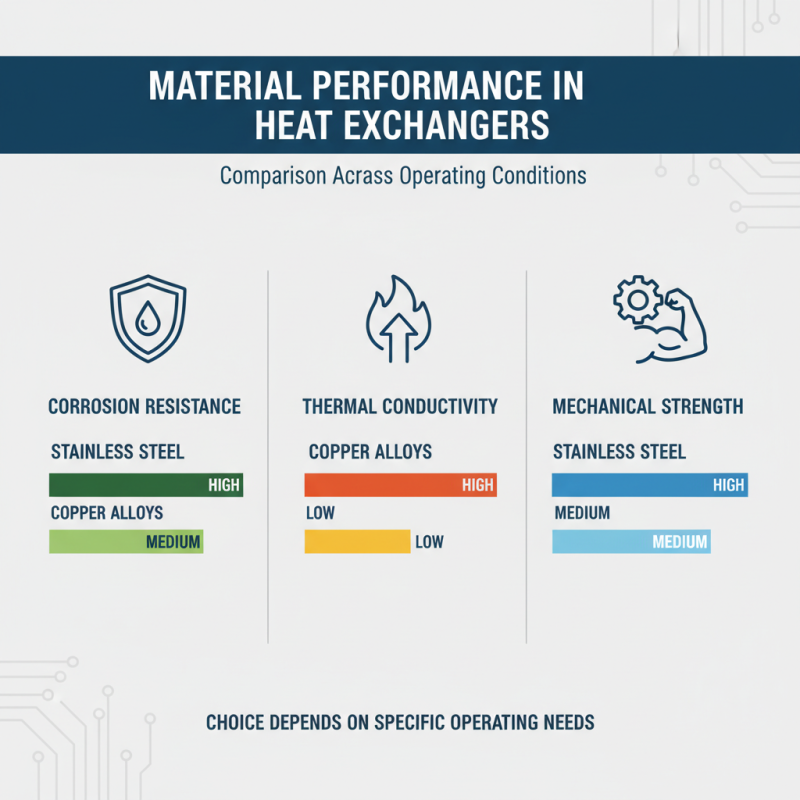
In selecting heat exchanger materials, understanding performance under various operating conditions is crucial. Corrosion resistance, thermal conductivity, and mechanical strength play key roles. For instance, stainless steel remains a popular choice due to its high corrosion resistance. However, it often lacks the thermal efficiency of copper-based alloys.
Copper alloys excel in thermal conductivity, boasting values around 400 W/m·K. This can significantly enhance heat transfer efficiency. However, they may corrode faster than other materials. A recent industry report highlights that copper's performance degrades in acidic environments. In contrast, titanium offers excellent strength and resistance to seawater. Yet, titanium can be more expensive and less efficient in terms of thermal conductivity.
Material selection also depends on temperature and pressure ranges. For high-temperature applications, materials like Inconel are favorable due to their strength. Yet, they are not ideal for lower-temperature processes. Balancing cost, performance, and environment is vital, as some materials outperform others under specific conditions. Thus, understanding the unique characteristics of each option is essential for optimal heat exchanger design.