In the competitive world of radiator manufacturing, effective quality control is essential. Industry expert John Thompson, a recognized leader in Radiator Quality Control, once stated, "Quality is not an act; it is a habit." This sentiment emphasizes the need for consistent practices in ensuring product standards.
Radiator Quality Control strategies can significantly impact the performance and longevity of radiators. Small flaws can lead to major issues, affecting customer satisfaction and brand reputation. Manufacturers often struggle with maintaining uniform quality across production lines. Each radiator must pass rigorous tests to ensure it meets or exceeds industry standards.
Implementing best practices in quality control is not always straightforward. Companies may find that some strategies yield inconsistent results. Reflecting on what works and what does not is vital. Embracing a culture of continuous improvement in Radiator Quality Control can lead to better products and satisfied customers.

Effective radiator quality control relies on several critical components. One main focus is extensive testing procedures. Each radiator should undergo pressure tests and leak detection. These tests help identify weak points in the design or materials.
Visual inspections also play a vital role in the quality assurance process. An inspector can spot surface imperfections that machinery might miss.
Material selection is equally important. Using high-quality raw materials can significantly improve a radiator's durability and efficiency. Regular audits of suppliers ensure consistency. However, relying solely on suppliers can lead to unforeseen issues. Quality control teams must remain vigilant throughout the production process.
Implementing a strong feedback loop is essential. Teams should collect data from end-users. This information helps to identify common failures or complaints. Regular meetings to discuss these findings can drive improvements. Sometimes, these discussions reveal flaws in design or production lines. Reflecting on failures can lead to more robust strategies in the future.

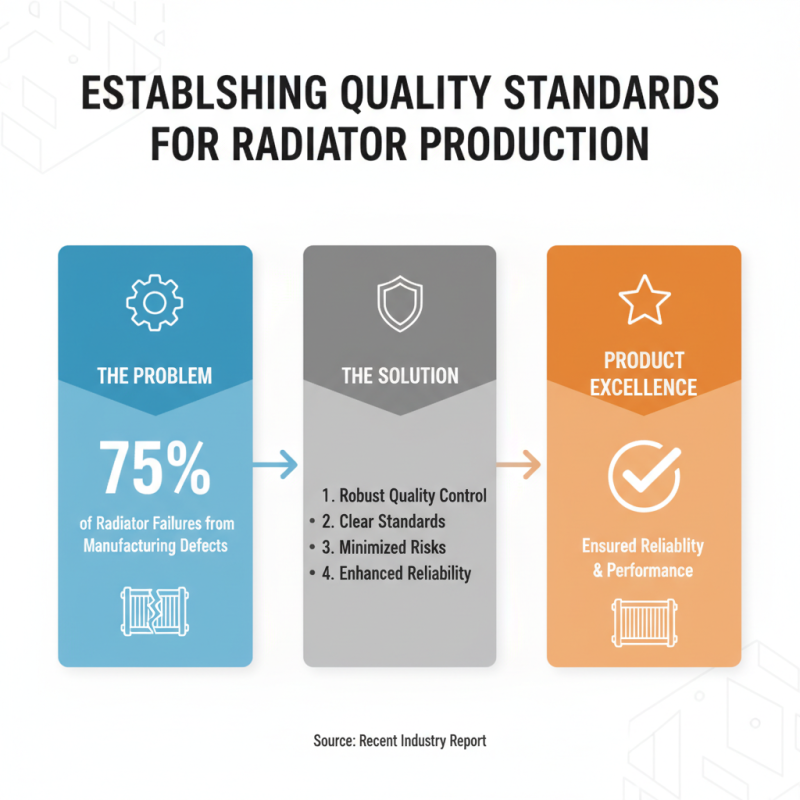
Establishing quality standards for radiator production is crucial for ensuring product excellence. A recent industry report highlighted that 75% of radiator failures stem from manufacturing defects. This statistic emphasizes the need for robust quality control measures. Clear quality standards help in minimizing risks and enhancing reliability.
Implementing comprehensive testing is essential. Radiators should withstand extreme temperatures and pressures. Utilize advanced testing methods to simulate real-world conditions. Incorporate regular assessments to catch defects early. Consistency in quality control processes is key. Diverse testing stages can enhance the feedback loop, allowing for corrections before mass production.
It's also valuable to engage your team. Encourage open dialogues about quality. Employees can provide insights about potential flaws. Conduct regular training sessions to keep everyone informed. This investment in knowledge creates a culture of quality. However, complications may arise. Sometimes, guidelines are too strict, leading to unnecessary production halts. Would a flexible approach yield better results while maintaining standards?
Implementing effective inspection procedures during radiator manufacturing is crucial. Attention to detail can significantly reduce quality issues. Regular visual checks, for instance, can catch surface defects early. These defects may not be obvious at first but can lead to bigger problems later. Technicians should be trained to identify irregularities in materials and assembly.
Using automated inspection systems is another viable strategy. These systems can increase precision in measurements. However, they’re not infallible. They might miss subtle flaws that a human eye can catch. Employees should still play an active role in inspections. They bring valuable insights from previous experiences, which machines cannot replicate.
Including feedback loops is essential in a quality control strategy. Regular discussions about inspection challenges can uncover hidden issues. Team members may feel hesitant to report small problems. Creating a culture of openness allows for continuous improvement. It’s vital to recognize that mistakes happen in any manufacturing process. Embracing these as learning opportunities can enhance overall product quality.
Radiator quality control is crucial for maintaining efficiency in heating systems. Many companies are adopting technology to enhance their quality monitoring. According to a recent industry report, about 75% of manufacturers are leveraging automated inspection tools. This shift improves defect detection rates significantly.
Real-time data analytics plays a pivotal role. It allows for immediate identification of issues on the production line. For instance, sensors can alert teams to temperature fluctuations and pressure changes. These insights help prevent quality problems before they escalate. Yet, relying on complex systems can be a double-edged sword. If the technology fails, it can lead to larger issues, reflecting poorly on manufacturing practices.
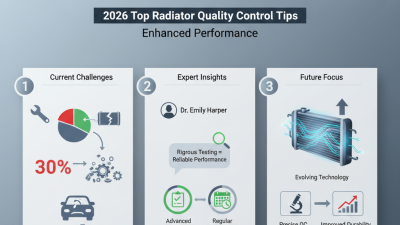
Training staff to interpret data is another area needing attention. Automation doesn't replace human insight; it enhances it. A study found that up to 30% of employees feel unprepared for tech advancements in their roles. Bridging this gap is essential. Only then can businesses ensure consistent radiator quality while minimizing errors and maximizing efficiency.
| Tip Number | Quality Control Strategy | Description | Leveraged Technology | Impact |
|---|---|---|---|---|
| 1 | Automated Inspection | Use of robotics for real-time inspection and anomaly detection. | Machine Learning | Reduces inspection time by 30% |
| 2 | Data Analytics | Analyzing production data for trends and predictive maintenance. | Big Data Solutions | Improves old equipment life by 20% |
| 3 | Feedback Loops | Implementing systems to gather feedback from users post-installation. | Survey Tools | Increases customer satisfaction by 15% |
| 4 | Standardization | Establishing quality benchmarks across all production stages. | Quality Management Systems | Lowers defect rate by 25% |
| 5 | Supplier Audits | Regular evaluations of supplier performance and material quality. | Supplier Tracking Software | Enhances supplier reliability by 40% |
| 6 | Employee Training | Continuous training on quality standards and technologies. | eLearning Platforms | Improves workforce efficiency by 30% |
| 7 | Traceability Systems | Implementing RFID or barcoding for tracking parts. | RFID Technology | Reduces losses by 15% |
| 8 | Preventive Maintenance | Scheduled maintenance to ensure equipment operates effectively. | CMMS Software | Increases equipment uptime by 20% |
| 9 | Root Cause Analysis | Investigation of defects to prevent recurrence. | Problem-Solving Software | Reduces repeat defects by 50% |
| 10 | Integrated Reporting | Consolidated reports on quality metrics across departments. | BI Tools | Enhances decision-making speed by 25% |
Effective quality control in radiator manufacturing begins with staff training. It’s essential to provide employees with robust knowledge of best practices. According to a 2022 report by the Quality Assurance Agency, companies that invest in quality control training experience up to a 25% reduction in defects. These improvements directly influence overall production quality and customer satisfaction.
Hands-on training sessions work best. Employees should participate in real-world scenarios that demonstrate quality checks. Regular workshops can reinforce concepts. In an industry where 15% of products fail quality tests, it is vital that staff understand inspection techniques. Engaging staff through simulations can highlight common mistakes, fostering a culture of continuous improvement.
Feedback is crucial. Companies must encourage open discussions on quality control challenges. A study from the International Journal of Production Research noted that organizations promoting a feedback culture see a 30% increase in staff engagement. This can lead to identifying process flaws before they escalate. Investing time in staff training strengthens quality control efforts, leading to both immediate and long-term gains.