10 Essential Tips for Understanding Heat Exchanger Technology?
Understanding Heat Exchanger Technology is crucial in various industries, such as energy and manufacturing. According to the International Energy Agency, heat exchangers can save up to 20% of energy consumption in industrial processes. That's a significant figure that highlights their importance. Experts emphasize the efficiency of these systems. Renowned engineer Dr. Lisa Renfield states, "Heat exchanger technology forms the backbone of energy optimization." This underscores its role in effective energy management.
However, navigating this complex field can be daunting. Many professionals struggle to grasp the nuances of various designs and applications. Heat exchanger technology includes shell-and-tube, plate, and air-cooled designs. Each type has unique advantages and challenges. The diversity in applications often complicates decision-making. Moreover, the rapid advancement of technology can leave even seasoned professionals behind.
Regularly revisiting fundamental concepts is essential. The industry is evolving with new innovations and materials. Embracing ongoing education is key to staying current. As practitioners face real-world challenges, understanding these systems becomes increasingly important. In the fast-paced landscape of Heat Exchanger Technology, a solid grasp of its principles is necessary for success.
Key Principles of Heat Exchanger Operation
Heat exchangers play a crucial role in various industries, efficiently transferring heat between two or more fluids. Understanding their operation is vital for optimizing performance and reducing energy consumption. A well-designed heat exchanger can save a facility significant operational costs. Industry reports indicate that optimizing heat exchanger efficiency can improve energy savings by up to 30%.
Key principles of heat exchanger operation include convection, conduction, and the importance of surface area. Convection facilitates heat transfer through fluid movement. Understanding fluid dynamics is essential for maximizing effectiveness. Conductive heat transfer occurs through solid materials within the exchanger. The surface area affects how much heat can be exchanged, making design critical.
Tip: Regular maintenance is crucial. Dirty or clogged exchangers lose efficiency. Cleaning them can restore heat transfer rates significantly. Another insight is about temperature differences. Larger temperature differences can enhance performance levels. However, operating too close to these limits can lead to inefficiencies or equipment failure. Keeping these principles in mind can lead to better decision-making in your heat exchanger systems.
Types of Heat Exchangers and Their Applications
Heat exchangers are vital in many industries, ensuring efficient thermal energy transfer. Understanding the types and their applications can enhance system performance. There are several major types of heat exchangers: shell-and-tube, plate, air-cooled, and double-pipe. Each type serves different purposes based on design and fluid characteristics.
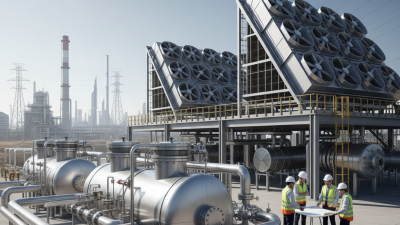
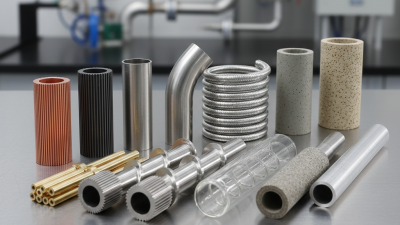
Shell-and-tube heat exchangers are common in power plants. They consist of multiple tubes, allowing for high capacity and efficient heat transfer. Plate heat exchangers are more compact and offer higher thermal efficiency, suited for food and beverage processing. Air-cooled exchangers are perfect for environments where water is scarce. They rely on air circulation to dissipate heat effectively. Double-pipe exchangers are simple and easy to maintain, often used in smaller operations.
However, selecting the right type requires careful consideration of the flow requirements and temperature ranges. Not every option fits every scenario. Some heat exchangers may not offer the efficiency needed for specific applications. Therefore, it's crucial to assess the application's unique needs, ensuring optimal performance.
Factors Influencing Heat Transfer Efficiency
Heat exchanger efficiency is influenced by several key factors. One major element is the flow arrangement. Counterflow designs tend to outperform parallel flow configurations. According to the American Society of Mechanical Engineers, counterflow heat exchangers can achieve up to 30% higher thermal efficiency. This difference is crucial for optimizing energy use in industrial applications.
Another factor is surface area. A larger surface area allows more heat transfer. Studies indicate that increasing surface area by just 10% can enhance efficiency by up to 15%. Yet, adding surface area can lead to increased pressure drops, which complicates system design.
Material selection also plays a vital role. For instance, copper conducts heat better than stainless steel, but the cost difference can be significant. Engineers must balance thermal performance with budget constraints. Temperature differentials cannot be overlooked either. Smaller temperature differences between the fluids lead to decreased driving forces for heat transfer. Thus, understanding these factors is essential for maximizing heat exchanger performance.
10 Essential Tips for Understanding Heat Exchanger Technology - Factors Influencing Heat Transfer Efficiency
| Tip No. |
Tip |
Influencing Factor |
Description |
| 1 |
Understand Fluid Dynamics |
Viscosity |
Higher viscosity fluids can reduce heat transfer efficiency. |
| 2 |
Optimize Flow Arrangement |
Flow Type |
Counterflow arrangements typically have higher heat transfer coefficients. |
| 3 |
Select Appropriate Materials |
Material Conductivity |
Materials with higher thermal conductivity enhance heat transfer rates. |
| 4 |
Maintain Optimal Flow Rates |
Flow Rate |
Flow rates that are too high or low can negatively impact heat transfer. |
| 5 |
Control Temperature Differences |
Temperature Gradient |
A larger temperature difference improves heat transfer efficiencies. |
| 6 |
Incorporate Fins or Extended Surfaces |
Surface Area |
Enhancing surface area increases heat transfer capabilities significantly. |
| 7 |
Insulate Where Necessary |
Heat Loss |
Insulation prevents unwanted heat loss, preserving efficiency. |
| 8 |
Regular Maintenance and Cleaning |
Fouling |
Fouling can dramatically reduce heat transfer efficiency. |
| 9 |
Monitor System Performance |
Data Analysis |
Regular performance data helps identify potential areas for optimization. |
| 10 |
Educate Staff and Users |
Knowledge Transfer |
An informed team can identify issues early and optimize operation strategies. |
Maintenance Practices for Optimal Heat Exchanger Performance
Maintaining heat exchangers is crucial for efficient performance. Regular inspection is key. Look for signs of wear, corrosion, or leaks. A small crack can lead to significant issues over time. Clean the surfaces to ensure optimal heat transfer. Scale and fouling can severely impact efficiency.
Another aspect to consider is monitoring operational parameters. Tracking temperature and pressure helps in identifying irregularities early. If values fluctuate outside expected ranges, investigate promptly. Regularly scheduled maintenance can prevent unexpected downtimes.
Documentation is also essential. Keep records of inspections and repairs. This not only helps in tracking performance but also in planning future maintenance. While some may overlook this step, it contributes to a holistic understanding of the system’s health. A balanced approach to maintenance is necessary; don’t ignore minor issues, as they can escalate quickly.
Common Issues and Solutions in Heat Exchanger Technology
Heat exchangers are critical in various industries. Yet, issues often arise, affecting efficiency. One common problem is fouling. This occurs when unwanted materials build up on heat transfer surfaces. It reduces heat transfer efficiency and increases energy consumption. Regular maintenance and cleaning schedules can mitigate this issue. Removing fouling deposits improves overall performance.
Another frequent issue is leaks. They can result from wear, corrosion, or poor installation. A leak can not only disrupt operations but also lead to severe safety hazards. Detecting leaks early is vital. Using advanced monitoring technologies can help identify potential problems before they escalate. Regular inspections can also ensure that seals and joints are intact.
Temperature imbalances can also present challenges. They may cause thermal stress, leading to component failure. This is particularly relevant in systems with fluctuating temperature demands. Implementing control systems that balance temperatures can enhance operational stability. Examining design configurations is essential to address these imbalances effectively. Proper understanding is key to troubleshooting these issues in heat exchanger technology.
Heat Exchanger Efficiency Comparison
This bar chart displays the thermal efficiency of different types of heat exchangers. The data showcases the average efficiency rating, indicated in percentage, for each type. Understanding these values helps in selecting the appropriate heat exchanger technology for various industrial applications.