Top 10 Industrial Heat Exchangers You Should Consider?
As industries strive for efficiency and sustainability, the importance of Industrial Heat Exchangers cannot be overstated. According to the Global Heat Exchanger Market Report, the industry is projected to grow significantly, driven by advancements in technology and increasing energy demands. An eminent expert in the field, Dr. Emily Thompson, states, "The right heat exchanger can lead to substantial energy savings and improved operational efficiency."
Understanding the different types of heat exchangers is crucial. Each type serves a unique purpose across various industries, from chemical processing to power generation. However, selecting the best one can be challenging, as it involves technical specifications and compatibility with operational requirements. The complexity of this decision often leads manufacturers to overlook some vital factors, such as maintenance and longevity.
While many focus solely on initial investments, long-term performance and efficiency are equally important. Inadequate heat exchanger selection may result in subpar performance and increased costs. Thus, it is essential to weigh every option carefully, keeping in mind that the right Industrial Heat Exchanger can significantly enhance productivity while minimizing environmental impact.
Overview of Industrial Heat Exchangers and Their Importance
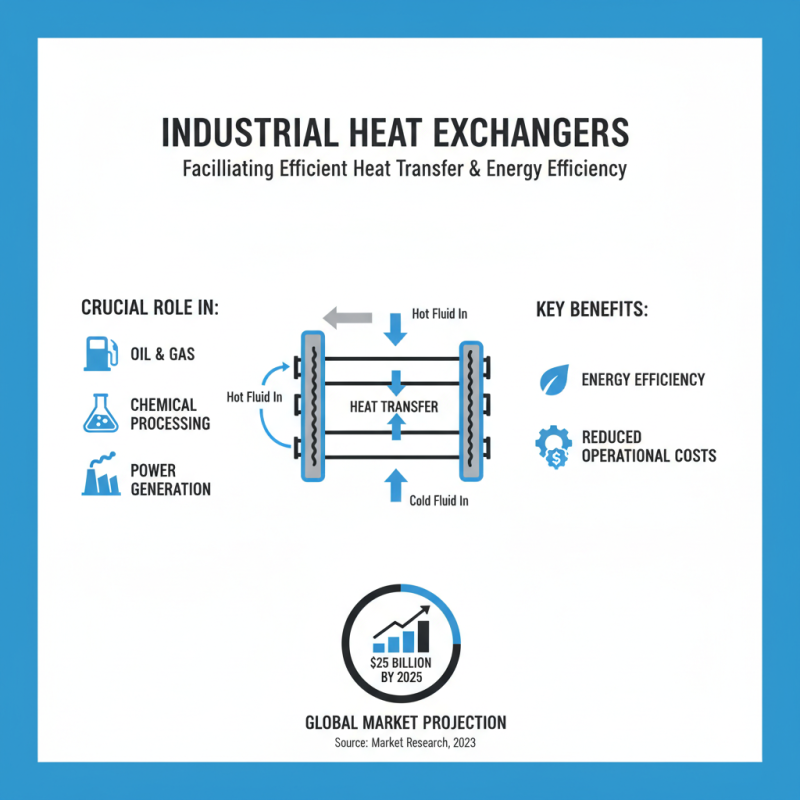
Industrial heat exchangers play a crucial role in various sectors. They facilitate efficient heat transfer between fluids. This process is vital in industries like oil and gas, chemical processing, and power generation. According to market research, the global heat exchanger market is projected to reach $25 billion by 2025. This highlights their importance in maintaining energy efficiency and reducing operational costs.
When selecting heat exchangers, consider the fluid types and temperature ranges involved. Some designs are more effective for specific applications. For instance, plate heat exchangers excel in applications requiring compact designs. Furthermore, maintenance is critical for ensuring longevity. Regular inspections can identify wear and prevent costly failures.
**Tips:** Focus on energy efficiency when choosing models. Always consider your specific operational needs. Collaborate with experts to optimize performance.
Types of Industrial Heat Exchangers: A Comparative Analysis
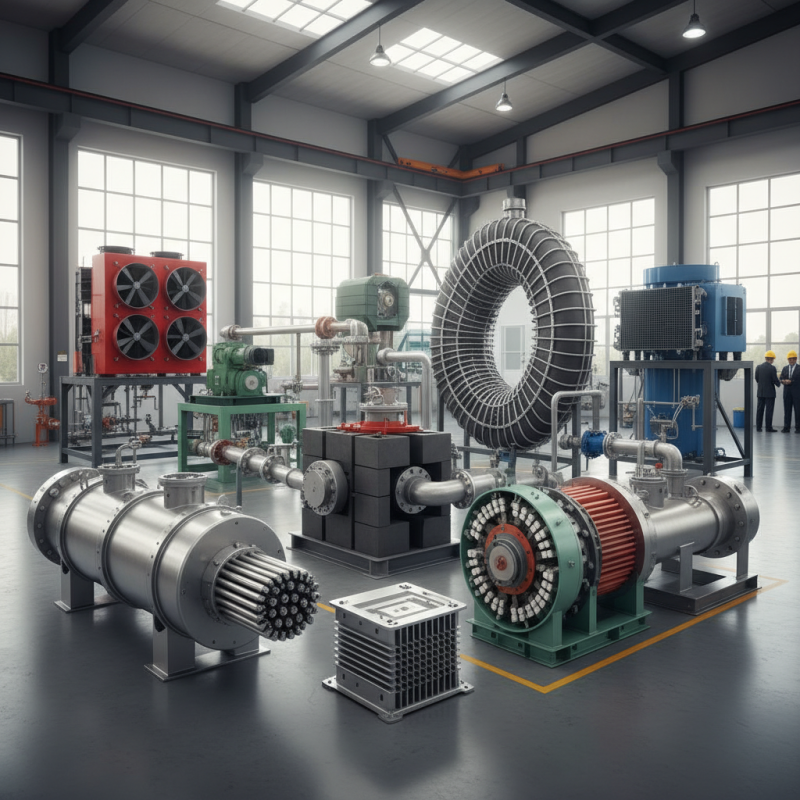
When considering industrial heat exchangers, understanding their types is crucial. Each type offers unique benefits and limitations, impacting efficiency and cost-effectiveness. Common types include shell-and-tube, plate, and air-cooled heat exchangers. According to recent industry reports, shell-and-tube exchangers are prevalent due to their high heat transfer rates. They are flexible, enabling customization for various applications.
Plate heat exchangers, on the other hand, are compact and offer better thermal efficiency. They are suitable for processes requiring quick heating or cooling. However, they may not handle high-pressure applications as well as shell-and-tube models. Air-cooled exchangers are ideal for locations with limited water supply but can be less effective in extreme heat. The choice often depends on space, budget, and performance needs.
Tip: Evaluate your operational temperature range. A mismatch can lead to inefficiencies, impacting your energy consumption. Ensure you conduct a thorough analysis before selecting a heat exchanger type.
Remember that material choice is as important as the type. Carbon steel or stainless steel may be suitable, but the application environment greatly influences this decision. Assessing corrosion resistance and thermal conductivity is vital. Ignoring these factors can lead to premature failures and increased maintenance costs.
Tip: Always consult technical data sheets provided by manufacturers. This ensures informed choices tailored to your specific operational conditions. The right combination can enhance overall system performance and longevity.
Top 10 Industrial Heat Exchangers
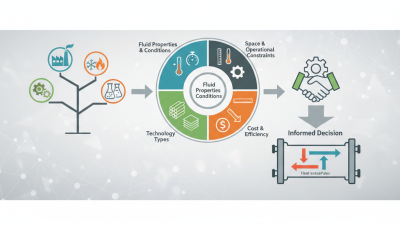
Key Factors to Consider When Choosing a Heat Exchanger
When selecting a heat exchanger, several critical factors warrant careful consideration. Efficiency is paramount. According to the ASHRAE Handbook, a highly efficient heat exchanger can improve overall system performance by up to 30%. This efficiency reduces energy costs, which can significantly impact long-term operational budgets.
Another aspect is material compatibility. The chosen materials must withstand both temperature and pressure variations. The corrosion potential of fluids should also be assessed. Research from the American Society of Mechanical Engineers (ASME) highlights that inappropriate material choices can lead to premature failure. Such failures are costly and can cause extensive downtime.
Finally, the heat exchanger's size and footprint matter. A compact design might save space but may affect performance. Balancing space constraints with efficiency is key. Understanding specific application requirements will help in making the right decision. An ill-fitting heat exchanger can lead to inefficiency, affecting entire systems. Keeping these factors in mind can lead to better choices and improved operational reliability.
Top 10 Industrial Heat Exchangers: Features and Applications
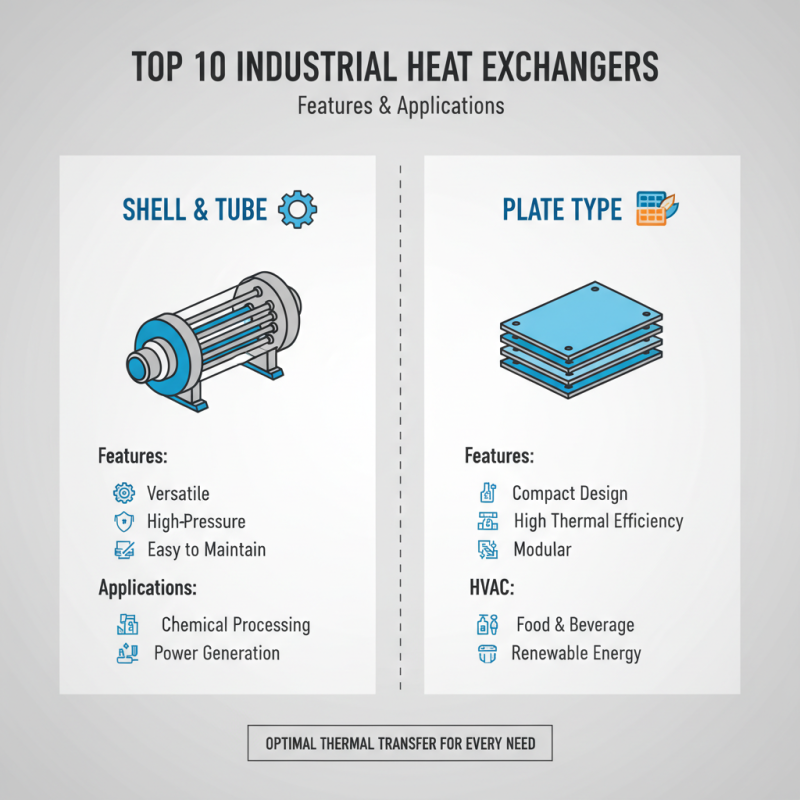
When selecting an industrial heat exchanger, understanding its features and applications is crucial. Different types excel in varying scenarios. For example, shell and tube heat exchangers are well-known for their versatility. They manage high-pressure applications efficiently. These exchangers ensure optimal thermal transfer while being relatively easy to maintain. In contrast, plate heat exchangers offer compact designs, making them ideal for space-restricted environments.
The choice of material is another key factor. Stainless steel and titanium are common due to their corrosion resistance. This longevity is vital in industries like chemical processing. However, the initial cost can be higher. Maintenance protocols must also be in place to monitor performance and integrity. Regular inspections help identify potential leaks early, saving time and resources.
Heat exchangers are not one-size-fits-all. Each type serves unique purposes. Understanding these differences enhances decision-making. Keep in mind the evolving industry standards and technologies. This awareness can lead to more efficient applications and sustainable practices in the long run.
Maintenance Best Practices for Industrial Heat Exchangers
Maintaining industrial heat exchangers is crucial for optimal performance. Regular maintenance can extend their lifespan significantly. According to a report by the U.S. Department of Energy, the right maintenance practices can improve energy efficiency by up to 15%. This highlights the importance of a tailored approach to maintenance strategies.
One of the key practices is routine inspections. Inspect for corrosion, leaks, and fouling. Fouling can reduce heat transfer efficiency by 50% or more. Implementing a scheduled cleaning regime can mitigate this issue. Moreover, using advanced monitoring technologies can provide real-time data. This data helps in predicting potential failures before they occur.
Training staff is also essential. Empowering operators with knowledge about system operations increases reliability. However, gaps in training can lead to oversights. This could result in costly downtime. A study shows that improper maintenance accounted for approximately 30% of equipment failures in the industry. Investing in training can therefore yield long-term savings and reliability.
Top 10 Industrial Heat Exchangers You Should Consider
| Heat Exchanger Type |
Application |
Efficiency (%) |
Material |
Maintenance Frequency |
| Shell and Tube |
Oil Refining |
85 |
Stainless Steel |
Annually |
| Plate Heat Exchanger |
Food Processing |
90 |
Titanium |
Semi-Annually |
| Air Cooled Heat Exchanger |
Power Generation |
75 |
Aluminum |
Quarterly |
| Double Pipe Heat Exchanger |
Chemical Processing |
80 |
Carbon Steel |
Annually |
| Spiral Heat Exchanger |
Pharmaceuticals |
88 |
Heat Resistant Alloys |
Every 2 Years |
| Fin Tube Heat Exchanger |
HVAC Systems |
82 |
Copper |
Monthly |
| Heat Pipe Heat Exchanger |
Renewable Energy |
95 |
Aluminum, Copper |
Annually |
| Compact Heat Exchanger |
Marine Applications |
78 |
Stainless Steel |
Every 3 Years |
| Microchannel Heat Exchanger |
Refrigeration |
92 |
Aluminum |
Bi-Annually |
| Shell and Coil Heat Exchanger |
Waste Heat Recovery |
76 |
Carbon Steel |
Annually |