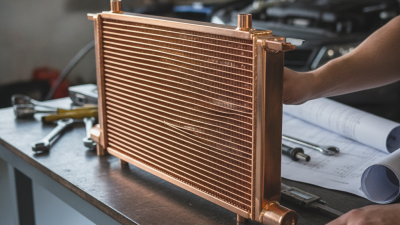
Choosing a cooling solution in 2026 requires more than comparing rated capacity and purchase price. Global buyers face hotter summers, unstable energy costs, stricter efficiency expectations, and varied installation conditions. This guide examines major Cooling Systems types, including air-cooled and water-cooled chillers, evaporative units, split systems, VRF platforms, and natural cooling options. Each category serves a different operating reality. A compact VRF system may suit a renovated office, while a water-cooled chiller can support a hospital campus with stable plant-room access. Location matters. So does maintenance.
Reliable selection begins with site evidence. Engineers should review peak loads, humidity, water availability, noise limits, electrical capacity, and future expansion plans. Manufacturer claims are useful, but measured performance deserves greater weight. Buyers should request test conditions, seasonal efficiency data, service records, and clear warranty terms. Small details matter. A clogged filter can raise energy use, while poor pipe insulation can quietly reduce comfort. Smart controls also require skilled commissioning; connectivity alone does not guarantee savings.
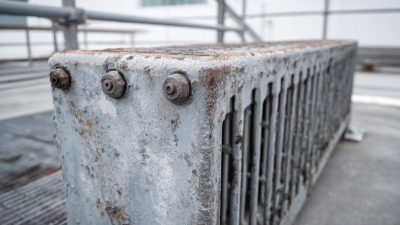
For international procurement teams, supplier capability is as important as equipment design. Verify factory experience, spare-parts access, technician training, documentation quality, and local support. Products should meet applicable safety, energy, and environmental requirements in the destination market. Requirements differ. A coastal warehouse may need stronger corrosion protection, while a data room demands precise temperature control and dependable redundancy. Buyers should compare total cost of ownership, not only the invoice. Electricity, water treatment, filters, refrigerant management, downtime, and replacement costs can change the calculation.
This overview remains practical, not absolute. No single system wins every climate or building type. Real projects often expose assumptions that looked reasonable on paper. Better questions usually produce better cooling.
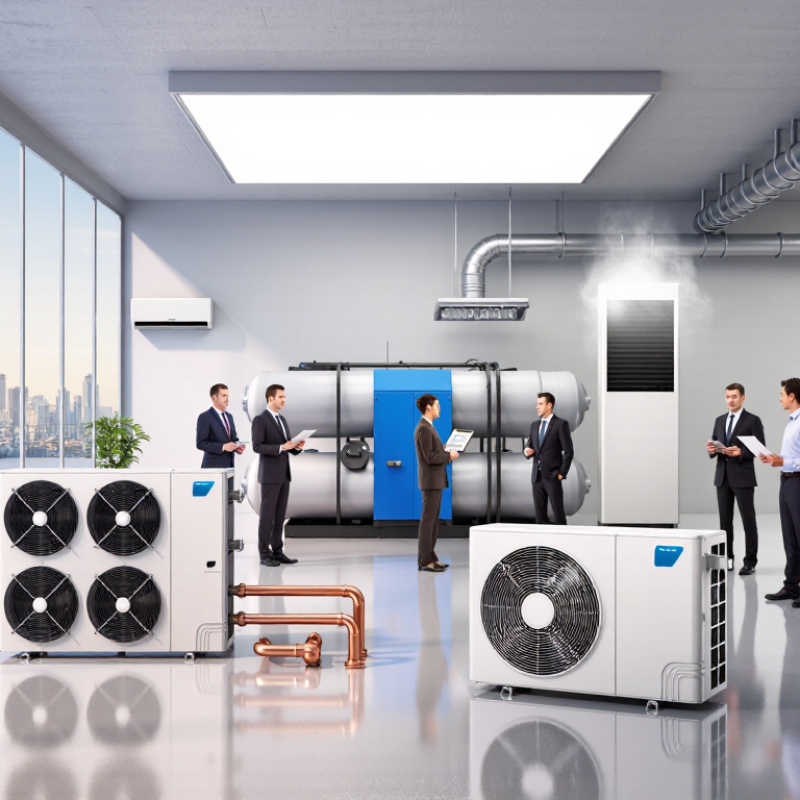
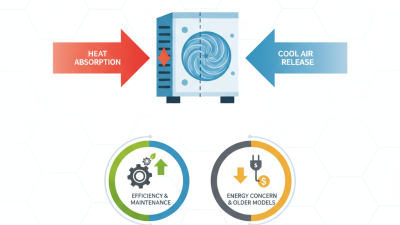
Cooling systems remove unwanted heat from equipment, buildings, processes, or stored products. They transfer heat from a warmer area to a cooler sink. Air cooling, liquid cooling, evaporative cooling, and refrigeration-based systems use different methods to achieve this task.
Their purpose extends beyond comfort. Proper cooling protects electrical components, preserves temperature-sensitive goods, improves production stability, and reduces unplanned maintenance. A server cabinet may use fans to move air across heat sinks. A process line may circulate chilled water through a heat exchanger. Refrigeration systems compress, condense, expand, and evaporate a working fluid to carry heat away.
The cycle sounds simple. Real installations are not.
Global buyers should examine ambient temperature, humidity, water quality, load changes, energy supply, and maintenance skills. A system designed for a mild warehouse may struggle in a dusty, hot region. Poor airflow can create warm pockets, even when the control panel shows a normal reading. Oversized equipment may cool quickly but waste energy during low-demand periods. Undersized equipment can run continuously and still miss the target temperature.
Measured data matters. Buyers should request cooling capacity, power consumption, operating limits, noise levels, and service requirements. Sensors need suitable placement, not just convenient placement. Some assumptions remain uncertain until seasonal testing begins. That is an uncomfortable but important point. Cooling performance depends on installation quality as much as equipment selection.
Cooling buyers in 2026 usually compare air-cooled chillers, water-cooled chillers, direct-expansion systems, and evaporative cooling. Air-cooled units suit locations with limited water access. Water-cooled systems often deliver better efficiency, but they need cooling towers, water treatment, and regular maintenance. Direct-expansion equipment cools rooms quickly through refrigerant circuits. Evaporative systems reduce energy use in dry climates, though humidity limits their performance.
The International Energy Agency reports that space cooling could more than triple by 2050 from 2016 levels. Its analysis also shows cooling already represents a significant share of global electricity demand. For data centers, liquid cooling is gaining attention because high-density servers create intense heat in small spaces. District cooling remains practical for airports, hospitals, and large urban developments. However, one system rarely fits every project. A low-energy design can still fail when water quality, local weather, or maintenance skills are overlooked.
Tips: Match the system to climate, load profile, water availability, and service capacity. Request seasonal efficiency data, not only peak ratings. Check noise levels near occupied areas. The U.S. Department of Energy notes that heat pumps move heat rather than create it, which supports efficient cooling and heating in suitable climates. Buyers should also review refrigerant regulations and lifecycle costs. My field experience suggests that the cheapest quotation is often incomplete. Installation quality matters more than many spreadsheets admit.
Sources: IEA, The Future of Cooling; U.S. Department of Energy, Heat Pump Systems.
2026 Top Cooling Systems Types for Global Buyers
How to Compare Cooling Capacity, Efficiency, and Operating Costs
Global buyers should compare cooling systems by measured performance, not advertised capacity alone. Air-cooled chillers suit sites with limited water, while water-cooled chillers often deliver better efficiency in large facilities. Variable refrigerant flow systems provide flexible room control for offices, hotels, and mixed-use buildings. Evaporative systems can reduce electricity use in dry climates, but humidity limits their performance.
Check cooling capacity in kilowatts under conditions close to the installation site. A system rated at 500 kW may deliver less during a 40°C afternoon. Ask for performance data at local ambient temperatures, partial loads, and seasonal conditions. Capacity matters.
Efficiency requires more than one ratio. Review COP, EER, or integrated seasonal efficiency, then examine fan, pump, and control-system consumption. Water-cooled equipment may need extra treatment, filtration, and water management. Those costs can quietly change the result. In coastal areas, corrosion protection may also affect maintenance budgets.
Operating cost calculations should include electricity tariffs, installation, inspections, refrigerant management, and expected component replacement. A lower purchase price can become expensive after repeated filter cleaning or inefficient part-load operation. I have seen comparisons overlook night-time tariffs and maintenance labor. That weakens the decision. Buyers should request independent test records, clear warranty terms, and service access before choosing capacity. Local technicians may also reveal practical issues that specification sheets miss.
| Cooling System Type | Typical Cooling Capacity | Typical Efficiency Indicator | Water Requirement | Operating Cost Profile | Installation Complexity | Maintenance Requirements | Best-Fit Applications | Key Buying Considerations |
|---|---|---|---|---|---|---|---|---|
| Air-Cooled Chiller | Approximately 50–2,000 kW per chiller | COP typically 2.8–3.5; seasonal efficiency depends strongly on outdoor temperature and part-load operation | Low direct water use; no cooling tower required | Medium to high electricity cost; generally higher than water-cooled chillers in hot climates | Medium; requires outdoor airflow, service clearance, chilled-water piping, and electrical capacity | Medium; condenser coils should be cleaned and refrigerant circuits inspected regularly | Commercial buildings, factories, schools, hospitals, and sites with limited water availability | Compare performance at the buyer’s design ambient temperature, sound level, part-load efficiency, and refrigerant compliance |
| Water-Cooled Chiller | Approximately 100–3,000+ kW per chiller | COP typically 4.5–6.5 at rated conditions; high efficiency is possible with favorable condenser-water temperatures | Requires cooling towers, makeup water, blowdown, and water-treatment chemicals | Usually the lowest electricity cost for large, continuously operating facilities | High; requires cooling towers, condenser-water pumps, water treatment, and mechanical-room infrastructure | High; includes tube cleaning, tower cleaning, water treatment, and Legionella risk management | Large offices, data centers, industrial plants, airports, and district cooling plants | Evaluate total cost of ownership, water availability, tower location, water quality, and minimum-load performance |
| Variable Refrigerant Flow (VRF/VRV) | Approximately 10–150 kW per connected system; larger projects use multiple systems | Rated COP commonly 3.2–4.5; inverter-driven systems can provide strong part-load efficiency | No direct cooling-water requirement | Medium; often efficient for buildings with varied occupancy and simultaneous zone control | Medium to high; refrigerant pipe length, elevation, branch configuration, and indoor-unit zoning are critical | Medium; filters, coils, drain lines, controls, and refrigerant circuits require scheduled service | Hotels, offices, retail buildings, apartments, and buildings requiring independent zone control | Check allowable pipe length, refrigerant charge limits, heating and cooling simultaneity, controls integration, and local safety rules |
| Rooftop Packaged DX Unit | Approximately 10–350 kW per unit | COP typically 2.5–3.5; seasonal efficiency varies by climate, ventilation load, and economizer operation | No direct cooling-water requirement | Medium to high; cost-effective for moderate loads but sensitive to high outdoor temperatures | Low to medium; factory-assembled unit simplifies installation, but roof structure and ductwork must be suitable | Low to medium; filters, coils, fans, belts, dampers, condensate drains, and compressors need servicing | Warehouses, retail stores, light industrial buildings, schools, and single-zone commercial spaces | Compare integrated ventilation, economizer controls, filtration, roof loading, service access, and low-ambient operation |
| Evaporative Cooling System | Approximately 5–500 kW per unit for direct or indirect commercial systems; larger air-handling installations are possible | Very low electrical energy use; effectiveness depends on outdoor dry-bulb temperature and wet-bulb depression | Requires water; consumption increases in hot, dry climates and with higher ventilation rates | Low electrical operating cost; total operating cost depends on water price, humidity, and required temperature control | Low to medium; usually simpler than mechanical refrigeration but requires drainage and water distribution | Medium to high; pads, pumps, nozzles, basins, and water hygiene must be maintained | Dry-climate warehouses, workshops, agricultural buildings, manufacturing areas, and semi-outdoor spaces | Do not use as a direct substitute for refrigeration in humid climates; assess indoor humidity, water quality, hygiene, and temperature limits |
| Absorption Chiller | Approximately 350–5,000 kW per chiller | Thermal COP typically 0.65–1.20; electrical consumption is low, but heat input is substantial | Usually requires cooling towers and treated condenser water | Highly dependent on the price and availability of waste heat, steam, hot water, or natural gas | High; requires heat-source integration, cooling-water systems, pumps, controls, and adequate plant-room space | High; solution concentration, vacuum integrity, corrosion control, and heat-exchanger maintenance are important | Combined heat and power plants, process industries, campuses, and sites with reliable waste heat | Compare delivered heat cost, annual operating hours, heat-source temperature, part-load behavior, water use, and backup arrangements |
| District Cooling Connection | Customer capacity commonly ranges from approximately 100 kW to several megawatts; plant capacity is site-specific | Central-plant COP commonly about 4.0–7.0, but customer efficiency also depends on network temperature and heat-exchanger performance | Usually no on-site cooling tower; water use occurs at the central plant | Potentially low on-site operating and maintenance cost; tariffs, demand charges, and connection fees determine the total cost | Low for the customer after network connection; requires compatible heat exchangers, meters, and building-side distribution | Low to medium for the customer; network operator maintains the central plant and distribution network | Dense urban developments, airports, hospitals, universities, commercial districts, and mixed-use developments | Review tariff structure, minimum contracted capacity, supply reliability, redundancy, connection cost, and contract duration |
| Geothermal or Ground-Source Heat Pump | Approximately 10–1,000 kW per system; larger projects use multiple modules or borefield loops | Cooling EER commonly 15–25 Btu/Wh, equivalent to approximately 4.4–7.3 COP under rated conditions | Closed-loop systems use little makeup water; open-loop systems require suitable groundwater management | Low to medium electricity cost; generally stable because ground temperature varies less than outdoor air temperature | High; requires boreholes, ground loops, land area, geological studies, and specialized installation | Low to medium; heat-pump equipment is maintained conventionally, while ground loops require limited routine service | Campuses, low-rise commercial buildings, residential developments, and sites with long operating horizons | Assess drilling conditions, available land, local permits, groundwater rules, lifecycle payback, and future expansion needs |
Comparison note: Capacity and efficiency values are representative engineering ranges for comparison purposes, not guaranteed equipment ratings. Actual results vary with climate, entering and leaving water temperatures, indoor conditions, load profile, fouling, controls, and maintenance quality.
Efficiency note: COP is the ratio of cooling output to energy input. For electrically driven equipment, a higher COP generally indicates lower electricity use. COP values for absorption chillers refer primarily to thermal input and should not be compared directly with electric-chiller COP values.
Operating-cost note: A reliable purchase decision should include electricity or fuel prices, water and sewer charges, demand charges, maintenance, replacement parts, installation, financing, and expected annual operating hours.
Global buyers should compare cooling systems against climate, building use, energy prices, and local service capacity. Air-cooled chillers suit water-scarce regions, while water-cooled systems often deliver stronger efficiency where reliable water treatment is available. Evaporative cooling can perform well in dry climates, but humidity can quickly reduce its value.
Start with the real cooling load, not the equipment label. Oversized units cycle poorly and waste energy. The International Energy Agency reports that space-cooling energy demand could more than triple by 2050 without stronger efficiency measures. Buyers should review seasonal efficiency, part-load performance, noise, refrigerant requirements, and expected maintenance hours.
Refrigerant choice deserves careful attention. The United Nations Environment Programme states that efficient cooling and lower-global-warming refrigerants could avoid substantial emissions through 2050. However, regulations and technician qualifications differ between markets. A technically excellent system may become difficult to service after import. That assumption deserves scrutiny.
Consider total cost over ten years. Include installation, filters, pumps, water treatment, controls, downtime, and disposal. Hybrid systems may reduce peak electricity demand, especially where grids are unstable. Yet hybrid controls add complexity. Data can still be incomplete. Buyers should request tested performance data, clear warranty terms, spare-parts plans, and references from similar climates before selecting a system.
For global buyers, cooling-system selection starts with site conditions, not catalog ratings. Split systems suit small rooms, while chillers support larger buildings and process loads. Evaporative units can reduce energy use in dry climates, but humidity limits their value. During installation, technicians should verify airflow, pipe insulation, drainage, electrical capacity, and service clearance. A blocked drain can damage ceilings within hours. It happens more often than expected.
Maintenance needs a written schedule matched to operating hours and local dust levels. Clean filters regularly, inspect coils, test fans, and record temperature changes. Unusual vibration deserves attention before it becomes a compressor failure. Safety procedures should include power isolation, guarded moving parts, safe ladder use, and trained refrigerant handling. Local electrical, building, and environmental rules must guide every installation. A rushed commissioning check is a poor saving.
Future systems will use smarter sensors, variable-speed controls, heat recovery, and lower-impact refrigerants. Connected monitoring can warn buyers about rising energy use or declining airflow. Yet digital alerts cannot replace physical inspections. Data may also be incomplete when sensors drift or networks fail. Buyers should request service access, spare-part planning, cybersecurity controls, and clear performance records. The most advanced system still needs practical maintenance.
Installation, maintenance, safety, and future technology trends for common cooling system categories.
Representative nominal capacity values shown on a logarithmic scale. Actual capacity depends on climate, design conditions, load profile, efficiency requirements, and local regulations.
Select equipment after calculating the building load. Provide adequate airflow, drainage, electrical protection, structural support, and service access. Chillers and VRF systems require coordinated pipework and commissioning.
Clean filters and coils, inspect fans and pumps, verify refrigerant circuits, test controls, and record energy performance. Water-cooled systems also require condenser-water treatment and heat-exchanger inspection.
Installation and service should be performed by qualified technicians. Follow electrical isolation procedures, pressure-handling rules, ventilation requirements, refrigerant regulations, and local fire and building codes.
Global buyers are increasingly evaluating low-GWP refrigerants, variable-speed compressors, heat recovery, smart controls, demand response, heat-pump integration, and lower-carbon electricity use.