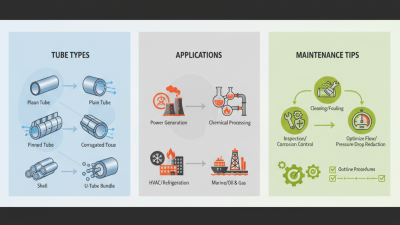
2026 Top Heat Exchanger Tube Types for Global Buyers?
In the competitive landscape of industrial manufacturing, the significance of selecting the right Heat Exchanger Tube cannot be overstated. According to a recent report by the Energy Efficiency and Renewable Energy division, the global market for heat exchangers is expected to reach $19.63 billion by 2026. A notable authority in the industry, Dr. Emily Carter, states, "Choosing the correct tube type can dramatically enhance thermal efficiency."
There are various types of Heat Exchanger Tubes available, each with unique properties. For instance, materials like copper or stainless steel offer different advantages in terms of durability and heat transfer efficiency. The right choice depends on specific applications, such as power generation or process industries. However, with so many options, it’s easy for purchasers to feel overwhelmed.
Understanding the nuances of each type is essential. Many buyers overlook key factors such as corrosion resistance and manufacturability. This neglect can lead to suboptimal performance and increased costs. The challenge remains in identifying not just the most popular types but the best fit for unique applications. Thus, exploring the evolving landscape of Heat Exchanger Tubes will be crucial for global buyers looking to enhance operational excellence.
2026 Market Overview of Heat Exchanger Tube Types for Global Buyers
In 2026, the heat exchanger tube market is set to evolve significantly. Global buyers will need to navigate various tube types catering to different applications. Copper, stainless steel, and titanium tubes stand out for their efficiency and durability. Each material influences the exchanger's performance and lifespan.
Buyers must consider several factors when choosing the right type. Operating temperatures and pressure levels play a crucial role in tube selection. There’s a need for careful analysis to avoid costly mistakes. Innovative designs help enhance heat transfer efficiency, but they may also introduce additional challenges in installation and maintenance.
Understanding the specific demands of each industry will guide better purchasing decisions. Fluctuating raw materials prices add another layer of complexity. Buyers should seek suppliers with a solid track record. Market trends suggest a growing demand for sustainable options, though many remain untested in real-world applications.
2026 Top Heat Exchanger Tube Types Market Overview
This chart illustrates the market share of various heat exchanger tube types projected for 2026. Copper is expected to hold the largest share, followed by stainless steel, aluminum, titanium, and carbon steel. This distribution reflects the material properties and applications suited for different industrial requirements.
Types of Heat Exchanger Tubes: Material Composition and Performance Metrics
When considering heat exchanger tubes, material composition is crucial. Carbon steel, stainless steel, and titanium are common choices. Carbon steel offers durability at a low cost. However, it may not resist corrosion effectively. Stainless steel is excellent for heat transfer and prevents rust. Yet, it can be expensive. Titanium is lightweight and resistant to corrosive environments, but its high cost limits its use.
Performance metrics of heat exchanger tubes can vary significantly. Key factors include thermal conductivity, corrosion resistance, and pressure rating. Higher thermal conductivity means better efficiency. But materials with lower corrosion resistance may not perform well in certain environments. It’s vital to analyze the operating conditions for each project.
Tip: Assess your project requirements carefully before selecting a tube type. Look into operational temperatures and fluid characteristics. Also, consider the long-term cost of maintenance. Remember that investing in high-quality materials can lead to lower replacement costs. Balancing performance and budget is achievable. Comparison of different materials and their performance can guide your decision. Evaluate your priorities before making a choice.
Comparative Analysis of Efficiency: Seamless vs. Welded Heat Exchanger Tubes
Heat exchanger tubes are vital in various industries. Two main types are widely used: seamless tubes and welded tubes. Each has its own efficiency and application benefits. When comparing these types, it’s essential to consider factors such as thermal conductivity, stress resistance, and production costs.
Seamless tubes are known for their superior strength and durability. A study by the Heat Exchanger Manufacturers' Association highlighted that seamless tubes can withstand greater pressure and temperature fluctuations. This makes them ideal for high-performance environments. In contrast, welded tubes, while less expensive to produce, may have weaknesses at the weld points. They often face challenges in high-stress situations.
Efficiency varies between the two. According to the International Institute of Refrigeration, seamless tubes have higher heat transfer rates, leading to better overall performance. However, their manufacturing process can be lengthy. Welded tubes, while efficient in lower-stress applications, may require more frequent maintenance. Buyers must weigh these factors carefully, considering both immediate costs and long-term efficiency.
Trends in Heat Exchanger Tube Demand: Regional Insights and Forecasts
The demand for heat exchanger tubes is rising globally. This trend shows significant regional differences. In North America, industries are seeking corrosion-resistant materials. Meanwhile, Asia-Pacific is focusing on more efficient, lightweight options. The push for sustainability is reshaping these markets too.
Emerging markets are ramping up their manufacturing capabilities. This shift presents both challenges and opportunities. Countries are investing heavily in infrastructure, which increases the need for reliable heat exchangers. However, supply chain issues remain a concern. Companies must adapt quickly to these dynamics.
In Europe, regulatory changes are influencing design preferences. Many firms are prioritizing eco-friendly materials. This focus reflects a broader commitment to reducing carbon footprints. As companies navigate these trends, collaboration will be essential. They must stay informed and agile to meet consumer demands effectively.
Industry Standards and Certifications Impacting Heat Exchanger Tube Selection
When selecting heat exchanger tubes, industry standards and certifications play a crucial role. They guide manufacturers and buyers in ensuring product quality and safety. For instance, the ASME (American Society of Mechanical Engineers) standards dictate the required specifications for pressure vessels, affecting design choices. Adhering to these standards not only ensures safety but also boosts reliability.
Another key aspect is the certification process. Products certified by recognized institutions like ASTM (American Society for Testing and Materials) are often seen as more trustworthy. Data shows that 80% of buyers prioritize certified products when making decisions. This trend emphasizes the importance of quality assurance in the heat exchanger market.
In recent reports, about 65% of manufacturers faced issues related to compliance. They struggled with maintaining standards while reducing costs. This often led to compromised quality, putting projects at risk. Buyers value adherence to industry standards but sometimes have to negotiate between quality and budget constraints. This ongoing challenge reflects a need for balance in the market.