Why Do Compressors Need a Cooler? The answer begins with a basic physical effect: compressed gas becomes hot. As pressure rises, discharge temperatures can climb rapidly, especially during long operating cycles or in warm environments. A Compressors Cooler removes part of this heat before it damages equipment or reduces system efficiency.
In practical service work, heat leaves visible clues. Oil may darken, seals may harden, and discharge pipes can become dangerously hot to touch. Excessive temperature also threatens valve plates, bearings, lubricants, and downstream air tools. An intercooler lowers air temperature between compression stages, while an aftercooler treats the final discharge. Cooler air occupies less volume and carries less moisture after proper separation. That can improve storage, piping, and control performance.
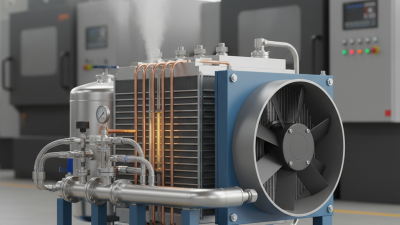
The design is not one-size-fits-all. Air-cooled systems depend on clean fins and steady airflow. Water-cooled systems need suitable flow, water quality, and regular inspection. A blocked radiator can quietly turn a reliable compressor into an overheating machine. Small details matter.
Yet cooling alone cannot solve every problem. Incorrect pressure settings, poor lubrication, restricted intake filters, and neglected drains may create similar symptoms. Engineers should check operating temperature, ambient conditions, pressure ratio, and manufacturer limits together. A temperature gauge helps, but it does not replace careful diagnosis. That is where experience matters. The best cooler is not simply the largest one; it is the one matched to the compressor, duty cycle, and working environment. Mistakes happen. Good maintenance learns from them.
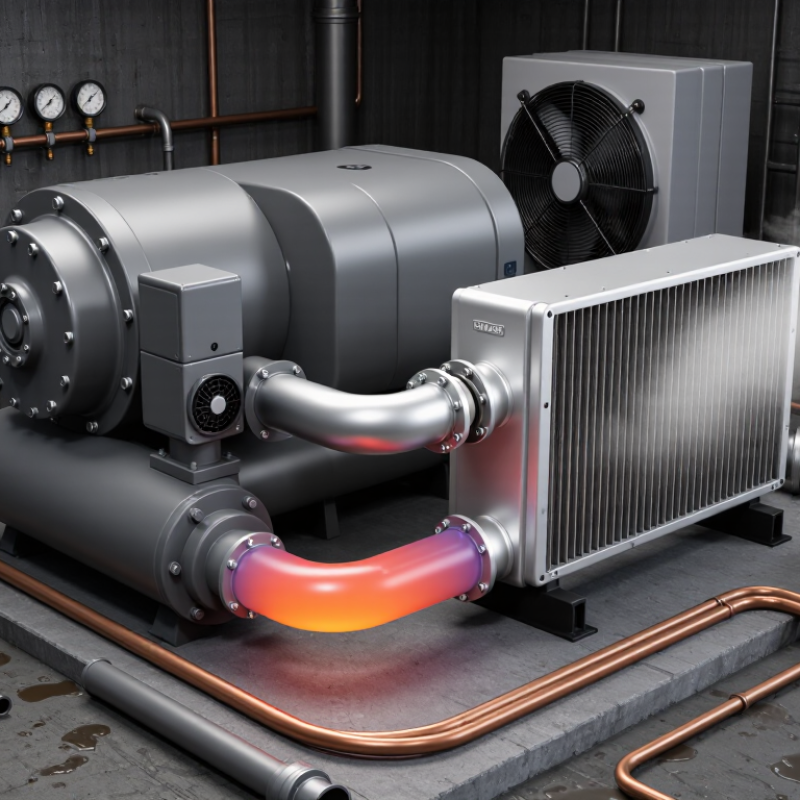
Inside a compressor, gas is squeezed into a smaller space. Pressure rises, but temperature rises too. During this process, mechanical work becomes heat. For air compression, the temperature can increase sharply when the pressure ratio is high. A discharge pipe may feel dangerously hot within minutes.
The heat affects more than comfort. High temperatures can thin lubricating oil, damage seals, and accelerate oxidation. They can also increase moisture condensation after compression. The U.S. Department of Energy reports that compressed-air systems may consume about 10% of industrial electricity. It also estimates that leaks can waste 20% to 30% of compressor output. Poor cooling makes this waste worse.
A cooler removes heat between compression stages or after discharge. Intercooling lowers the temperature before the next stage, reducing the work required for further compression. Aftercooling prepares the air for storage and treatment. In a plant room, this may mean cooler pipe walls, less liquid water downstream, and steadier pressure. ISO 7183 addresses compressed-air dryer performance, including pressure dew point and cooling-related conditions. The details matter.
A basic calculation can mislead.
Actual performance depends on inlet temperature, airflow, pressure ratio, and cooler cleanliness. Dust on fins restricts heat transfer. I have seen temperature alarms treated as sensor problems, although the real cause was blocked ventilation. That mistake is easy to repeat. A cooler is not an optional accessory; it controls the thermal conditions that shape the compressor’s reliability, efficiency, and air quality.
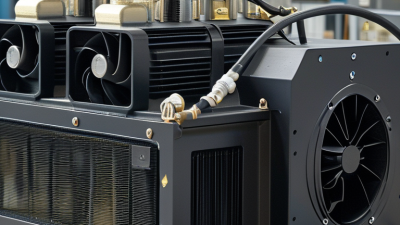
When a compressor squeezes air into a smaller space, its molecules move closer together. Their collisions become more frequent and energetic. That energy appears as heat. Pressure ratio matters. Higher pressure usually creates a higher discharge temperature.
The effect is easy to observe near the outlet. The pipe may feel hot, while condensed moisture collects farther downstream. Oil can also thin, oxidize, or lose its protective properties when temperatures remain elevated. In practical maintenance, technicians measure discharge temperature instead of trusting touch alone. A temperature sensor, pressure gauge, and service record provide better evidence.
A cooler removes much of this unwanted heat. An intercooler reduces temperature between compression stages. An aftercooler treats the air after the final stage. Lower temperatures protect seals, valves, lubricants, and connected equipment. They also help water vapor condense, making a drain or moisture separator necessary.
Cooling is not a cure for every problem. A blocked fin surface, weak airflow, or dirty heat exchanger can quietly increase operating temperature. Ambient conditions matter too. A compressor working in a dusty, enclosed room may need more frequent inspection. A simple rule helps, though it is not perfect: rising discharge temperature deserves investigation, not guesswork. Small temperature changes can reveal larger issues before they become expensive failures.
Compressors do not merely produce pressure; they also produce intense heat. That heat is why a cooler protects equipment. The U.S. Department of Energy reports that 80–93% of compressed air input energy becomes heat. Most of it must leave the system safely. (Improving Compressed Air System Performance, DOE)
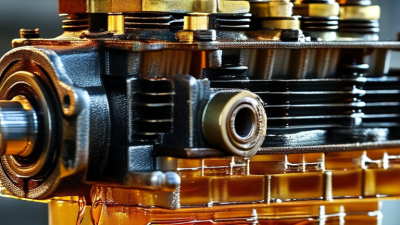
When discharge temperatures rise, lubricant films become thinner and oxidation accelerates. Bearings may lose protection. Valves can warp, while seals harden and crack. Heat also increases moisture condensation after compression. That moisture can carry oil residue into filters, pipes, and pneumatic tools. Heat travels fast. A cooler reduces gas temperature before damage spreads through connected components.
Industry maintenance guidance treats discharge temperature as a key operating signal, not just a comfort reading. The Compressed Air and Gas Institute recommends monitoring temperatures, oil condition, and cooling airflow during routine service. A blocked radiator, dirty fins, or a failing fan can push temperatures upward within minutes. Field technicians often find the fault after a shutdown, when the real evidence is already hidden. That is an imperfect habit. Temperature trends should be recorded earlier.
Cooling must match the compressor’s load, ambient temperature, and installation space. An undersized cooler may appear effective during a mild morning. It can fail during a hot afternoon. Regular cleaning and airflow checks are simple, but they are often neglected. A reliable inspection should compare inlet temperature, discharge temperature, oil temperature, and alarm history.
A compressor generates heat whenever it raises gas pressure. That heat travels through discharge piping, oil, and internal metal surfaces. Without controlled cooling, seals harden, lubricant oxidizes, and shutdowns become more likely. The cooler is not an accessory. It protects the compressor’s operating window.
Coolers remove heat through air, water, or both. An intercooler lowers temperature between compression stages, reducing the work required by the next stage. An aftercooler treats compressed air after the final stage. The U.S. Department of Energy reports that properly sized aftercoolers can reduce air temperature to roughly 15°F above ambient and remove about 60–70% of water vapor. That matters. Cooler air also reduces condensation inside downstream lines.
Oil coolers perform a similar duty in oil-injected systems. They keep viscosity within a usable range and help prevent varnish deposits. The Compressed Air and Gas Institute emphasizes that cooler performance depends on airflow, water quality, fouling, and pressure drop. A dirty cooler can quietly raise discharge temperature by several degrees, although the exact increase varies widely. Temperature sensors should be checked against handheld measurements. One reading can mislead. Ambient heat, blocked fins, and poor ventilation often work together. The design may be correct, but maintenance still decides whether cooling remains effective.
Compressing air raises its temperature. The cooler removes excess heat, lowers the discharge temperature, protects downstream equipment, and reduces moisture-related problems. Values shown are engineering estimates for dry air entering at 25°C, using a specific heat ratio of 1.4, an air heat capacity of 1.005 kJ/kg·K, and 75% compressor isentropic efficiency. The cooler outlet is controlled at approximately 35°C.
Why Do Compressors Need a Cooler?
A compressor needs cooling because compression turns much of its input energy into heat. The U.S. Department of Energy reports that approximately 80–93% of compressor input energy may become heat. Without effective cooling, discharge temperatures rise quickly. Oil can oxidize, seals can harden, and moisture may damage downstream equipment. In practice, a hot discharge pipe is an early warning sign.
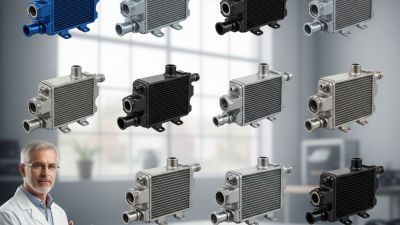
Choosing an effective compressor cooler requires more than matching rated power. Check the compressor’s heat rejection, airflow, ambient temperature, and operating hours. The cooler should handle peak heat loads, not only average conditions. DOE compressed-air guidance also recommends keeping cooling-air paths clean and ventilation adequate. A blocked filter can reduce cooling performance within hours.
Air-cooled systems suit many installations with limited water access. Water-cooled systems may perform better in dusty or high-temperature rooms, but they need clean water and regular scale control. Consider noise, maintenance access, fan power, and seasonal temperature changes. A 35°C room can challenge a cooler designed for 20°C conditions. Small details matter.
Oversizing is not always efficient. It can increase cost and create unnecessary pressure losses. Undersizing is worse. A technician may select a cooler from incomplete site data, then regret it during summer. The Compressed Air and Gas Institute emphasizes evaluating system conditions, not relying only on catalog ratings. Verify inlet temperature, outlet temperature, airflow, and fouling risk before approval.
| Cooling Factor | Why It Matters | Typical Engineering Range or Target | Selection Guidance |
|---|---|---|---|
| Discharge Gas Temperature | Compression raises gas temperature, which can degrade lubricants, seals, valves, and downstream equipment. | Many compressed-air systems aim for approximately 25–40°C above the cooling-medium inlet temperature after cooling, depending on design and operating conditions. | Check the compressor manufacturer’s maximum discharge-temperature limit and size the cooler for the worst-case operating point. |
| Required Heat-Rejection Capacity | The cooler must remove the heat generated by compression and mechanical losses without excessive temperature rise. | For many air compressors, the total recoverable heat is often close to 80–90% of the compressor’s electrical input, although the useful recovered portion varies by system. | Use actual power consumption, flow rate, inlet temperature, pressure, and operating hours rather than motor nameplate power alone. |
| Cooling Method | Air-cooled and water-cooled designs have different installation, maintenance, noise, and utility requirements. | Air-cooled systems use ambient air; water-cooled systems commonly use cooling water supplied at approximately 20–30°C, subject to site conditions. | Choose air cooling where water is limited; choose water cooling where stable heat rejection and compact equipment are priorities. |
| Ambient or Cooling-Water Temperature | Higher cooling-medium temperatures reduce the available temperature difference and may lower cooler performance. | Design conditions should reflect the site’s summer maximum temperature, often around 35–45°C for ambient-air calculations in industrial installations. | Use the highest expected inlet temperature, not the annual average, when determining cooler surface area and fan capacity. |
| Pressure Drop | Excessive pressure loss increases compressor energy consumption and may reduce the pressure available to the process. | A well-designed compressed-air aftercooler is commonly selected for a pressure drop of about 0.1–0.3 bar, subject to system requirements. | Compare pressure drop at the actual design flow, operating pressure, and temperature rather than relying only on no-load data. |
| Flow Rate and Operating Pressure | Heat-transfer performance and pressure loss change with mass flow, volumetric flow, and gas density. | The cooler should be rated at the compressor’s maximum inlet or discharge flow and normal operating pressure, including expected peak demand. | Avoid sizing from nominal pipe diameter alone; verify corrected flow, pressure, temperature, and turndown conditions. |
| Moisture Condensation and Drainage | Cooling compressed air below its dew point creates liquid water that can cause corrosion, contamination, and process problems. | Aftercoolers are commonly designed to cool compressed air to within approximately 10°C of the cooling-medium inlet temperature, allowing substantial condensation in humid conditions. | Install a correctly sized moisture separator and reliable automatic drain immediately downstream of the cooler. |
| Material Compatibility | The gas, condensate, cooling water, and cleaning chemicals can affect tube, fin, gasket, and casing life. | Common materials include aluminum, copper alloys, carbon steel, and stainless steel, selected according to pressure, temperature, and fluid chemistry. | Evaluate corrosion risk, oil carryover, water quality, chloride concentration, and applicable pressure-vessel requirements. |
| Fouling and Maintenance Access | Dust on air-side fins and scale on water-side surfaces reduce heat transfer and increase operating temperature. | The required cleaning interval can range from monthly inspection to annual service, depending on dust loading, water quality, and operating hours. | Select removable panels, accessible fins, drain points, isolation valves, and inspection ports where maintenance conditions are difficult. |
| Fan and Pump Energy | Auxiliary cooling power contributes to lifecycle cost and may offset part of the compressor’s efficiency gains. | Energy use depends on fan speed, airflow resistance, pump head, water flow, and control strategy; variable-speed control can reduce part-load consumption. | Compare total cost of ownership, including fan or pump power, cleaning, water treatment, replacement parts, and downtime. |
| Noise and Installation Space | Fans, airflow, vibration, and service clearances affect workplace conditions and installation feasibility. | Noise limits are site-specific; many industrial projects use an equipment-area target near 80–85 dB(A), subject to local regulations and exposure duration. | Review footprint, airflow direction, ventilation, acoustic treatment, vibration isolation, and access for filter or fin cleaning. |
| Control and Protection | Temperature monitoring helps prevent overheating, condensation problems, fan failure, and operation outside the design envelope. | Common provisions include temperature sensors, high-temperature alarms, fan control, differential-pressure monitoring, and drain-failure alerts. | Integrate cooler signals with the compressor control system and define alarm, shutdown, and maintenance thresholds before commissioning. |